Dr Silvia Titotto
Bio
Works across choreography, architecture, biomimetics, technological innovation, 4D printing, installation art, classical ballet, Tanztheater and contemporary performance. Interdisciplinary research has produced bioinspired design solutions; artistic research asks how principles found in living systems can become choreographic tools — generating new movement vocabularies rather than imitating natural forms.
Practice
Drawing on a background spanning architecture, design work within naval engineering and Vaganova ballet training, the practice works with biomechanics, geometry, origami-based structures, kinetics and kinematics, self-assembly, modelling and coding as choreographic materials. Natural mechanisms are translated into experimental movement and spatial systems, enabling performers to transform embodied patterns, expand their physical repertoire and actively shape choreographic space.
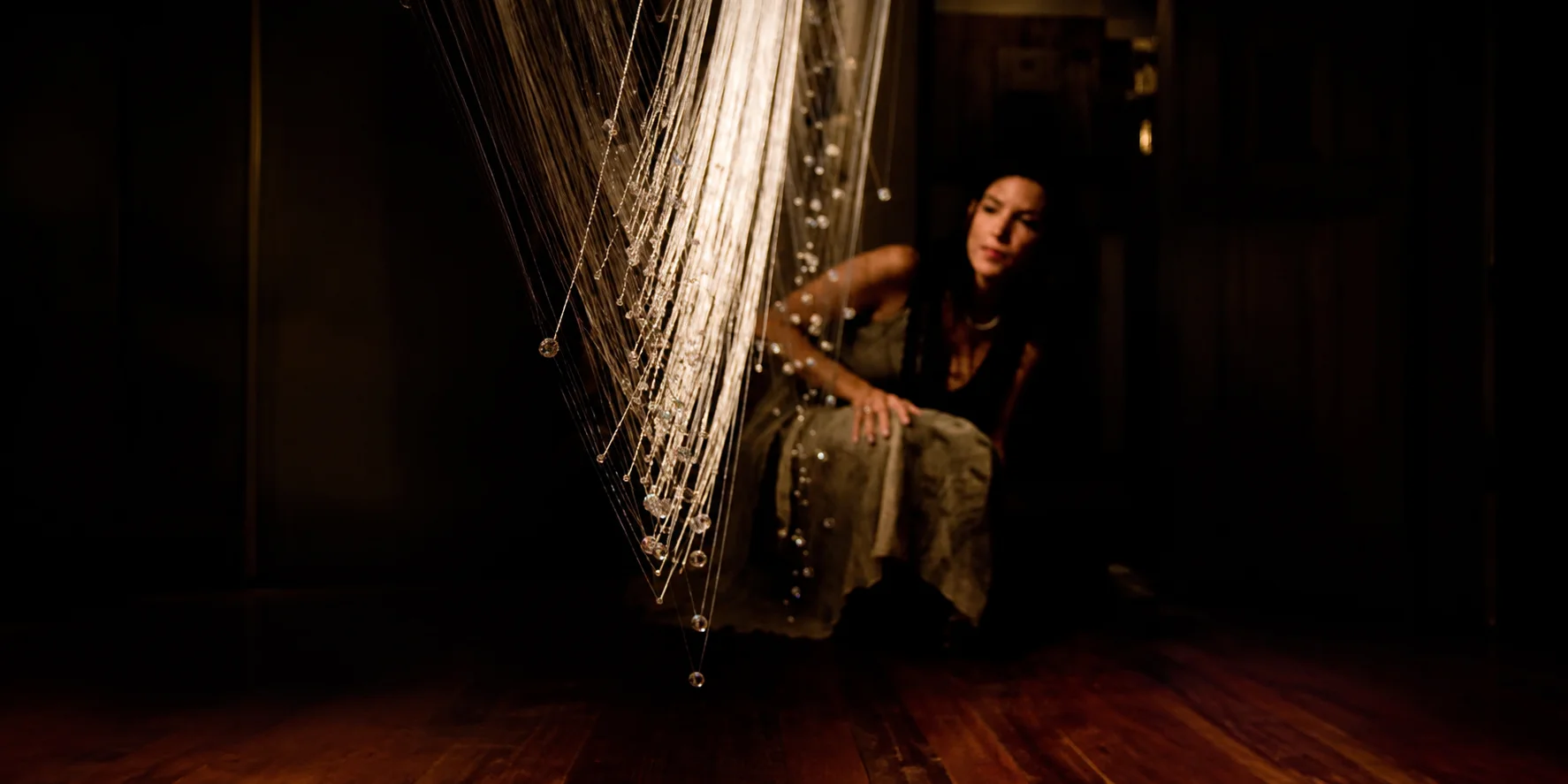
Across theatre, outdoor, site-specific and installation environments, choreography becomes a dynamic system in which bodies, forces, structures, light and space continually reorganise one another — informed by artists including Pina Bausch, William Forsythe and Russell Maliphant, and grounded in creative contemporary dance, Tanztheater, participatory performance and ecological thinking. Site-specific installation works merge movement, spatial environments and audience interaction, shown in Brazil and across Europe.
Background & research
Trained originally in Architecture and Urbanism, research evolved toward biomimetic systems, morphogenesis, collective behaviours and adaptive structures found in nature — investigations that now inform choreographic thinking around movement ecologies, spatial relationships, participation and embodied interaction. Two PhDs, completed in Brazil and Italy, and postdoctoral fellowships have supported peer-reviewed publications, awards and international collaborations, with work presented in the United States, Brazil and across Europe.
Teaching
Vocational Vaganova training in Brazil underlies two decades of teaching in higher education alongside classical ballet pedagogy: a Level 4 Diploma with the British Ballet Organisation, certification in Preparatory, Year 1 and Year 2 of the Vaganova methodology through the Bolshoi Theatre School in Brazil, and completion of the Inspire Teacher Training Programme at the Royal Ballet School. Teaching and artistic development have also crossed the Acosta Dance Centre, the Royal Ballet & Opera, Sadler’s Wells, independent dance companies and primary schools.
Participatory and sensory-inclusive creative practice grounds the work in accessibility, embodied imagination and emotionally responsive environments — spaces where movement, memory and participation become shared experience.
Qualifications
- MFA & PhD
- Choreography / interdisciplinary research — Brazil
- PhD
- Postdoctoral research — Italy
- Postdoctoral fellowships
- Interdisciplinary artistic & scientific research
- Level 4 Diploma
- British Ballet Organisation
- Vaganova Preparatory – Year 2
- Bolshoi Theatre School, Brazil
- Inspire Teacher Training Programme
- Royal Ballet School
Life is too short not to dance your dreams.